
Introduction to The Lean Startup
In today’s fast-changing business world, building a successful startup is more challenging than ever. Ideas come and go quickly, markets shift overnight, and customer expectations evolve constantly. This is exactly why the book has become one of the most influential business books of the last decade.
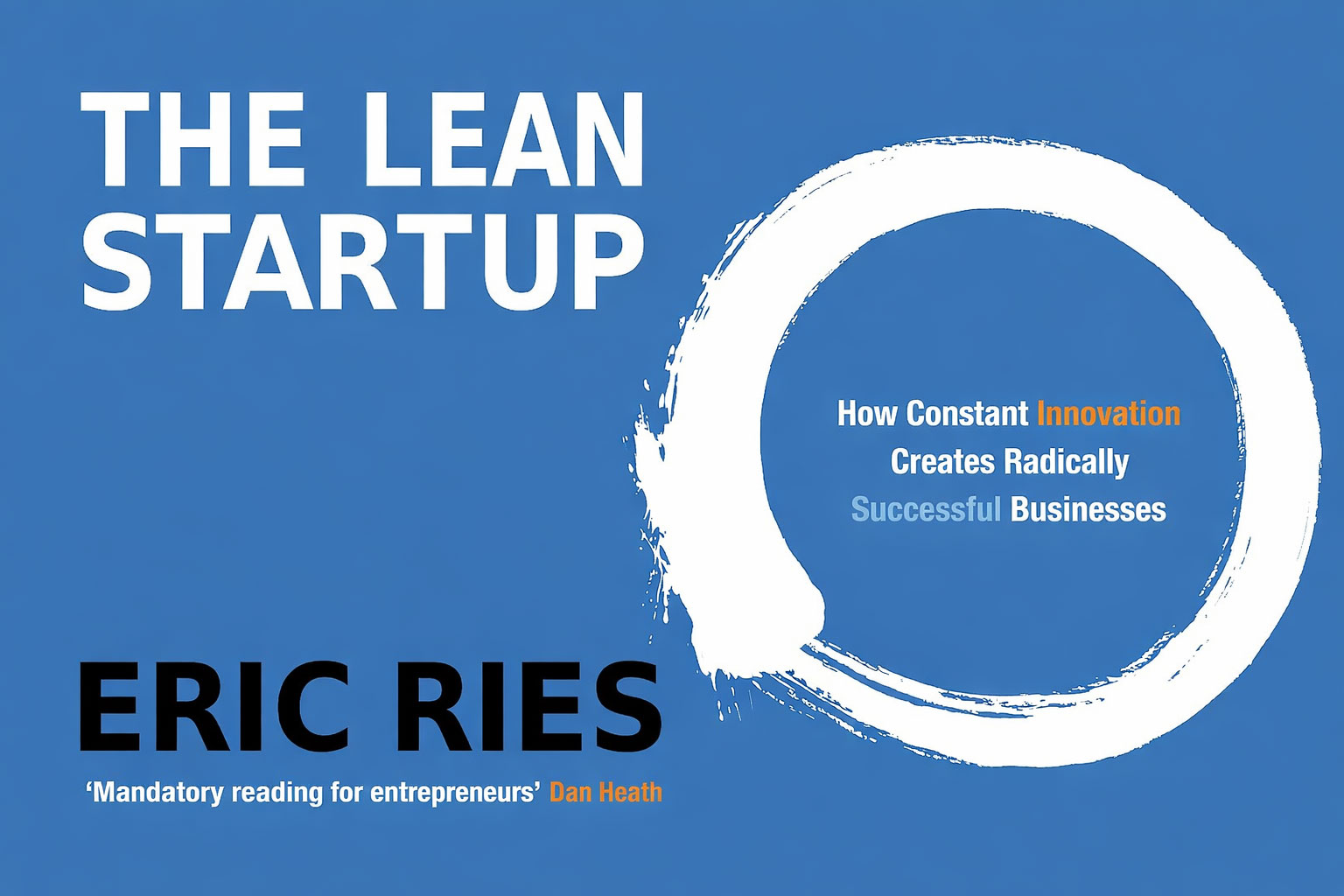
Written by Eric Ries, this book offers a new way of thinking about entrepreneurship. Instead of following long business plans and fixed strategies, the book encourages founders to learn through experimentation, real customer feedback, and continuous improvement.
Since its publication, this book has helped millions of entrepreneurs avoid wasted time, money, and energy. It provides a clear framework for building products that people actually want, not just products that look good on paper.
What makes the lean startup especially powerful is its practical nature. You don’t need an MBA, a large team, or massive funding to apply its ideas. Whether you are launching a tech startup, a small online business, or a new product inside a large company, this book gives you tools you can use immediately.
About the Author – Eric Ries
Eric Ries is an entrepreneur, author, and thought leader in the startup world. He is best known as the creator of the Lean Startup methodology, a system that has changed how companies approach innovation and growth.
Before writing this book, Eric Ries co-founded a startup that struggled despite having talented people and strong technical skills. Through failure and reflection, he realized that traditional business methods often fail in highly uncertain environments. These experiences became the foundation of the book
Eric Ries later worked closely with startups, investors, and large organizations. He helped companies apply lean principles to reduce risk and improve decision-making. Today, the ideas from this book are used not only by startups but also by global corporations, non-profits, and even government organizations.
What sets Eric Ries apart is his focus on learning over guessing. In the book, he does not promise guaranteed success. Instead, he provides a system that helps entrepreneurs make better decisions in uncertain conditions.
The Core Ideas and Main Content of The Lean Startup
At its core, this book asks a simple but powerful question:
How can we build a sustainable business with as little waste as possible?
To answer this, Eric Ries introduces a set of principles that work together as a complete system. These ideas help founders move faster, learn quicker, and reduce unnecessary risk.
Build–Measure–Learn Loop
The Build–Measure–Learn loop is the heart of it. It explains how startups should turn ideas into learning.
- Build: Create a basic version of your idea as quickly as possible.
- Measure: Observe how real users interact with it.
- Learn: Use data to decide what to improve, change, or remove.
In this book, success is not measured by how many features you build. Instead, it is measured by how much validated learning you gain. Each loop helps founders answer one critical question:
Should we pivot or persevere?
This approach prevents startups from spending months or years building products that nobody wants. The faster you complete the Build–Measure–Learn cycle, the faster you reduce uncertainty.
Minimum Viable Product (MVP)
One of the most popular concepts in this book is the Minimum Viable Product (MVP). While many people misunderstand this idea, Eric Ries explains it clearly and simply.
An MVP is the smallest version of a product that allows you to learn something meaningful about customers.
In the lean startup, the MVP is not about cutting corners. It is about focusing on what truly matters. By launching early, startups can:
- Test assumptions quickly
- Avoid unnecessary features
- Save time and money
Examples of MVPs in the book include simple landing pages, basic prototypes, or even manual processes behind the scenes. The goal is learning, not perfection.
This mindset encourages founders to take action instead of waiting for the “perfect” product.
Validated Learning
Another key idea in this book is validated learning. This concept shifts the definition of progress.
Traditional businesses often measure success using vanity metrics like downloads, page views, or media attention. In contrast, it focuses on metrics that show real customer behavior.
Validated learning means:
- Testing hypotheses with real users
- Measuring outcomes that matter
- Making decisions based on evidence
Eric Ries encourages startups to think like scientists. Every feature, campaign, or change should test a clear assumption. If the data proves the assumption wrong, the team must adapt.
This disciplined approach helps startups avoid emotional decision-making and focus on long-term sustainability.
Read more :
>>> Top 9 Best Business Books That Will Change Your Life—and Your Career—Forever
Key Highlights and Core Values of The Lean Startup
What makes this book stand out from other business books is its strong emphasis on mindset and values.
Customer-Centered Innovation
In the book, customers are the ultimate source of truth. Instead of guessing what people want, founders are encouraged to listen, observe, and learn directly from users.
This customer-first mindset helps businesses build products that solve real problems, not imagined ones.
Fail Fast, Learn Faster
Failure is often seen as something to avoid. However, this book reframes failure as a learning tool.
The book teaches entrepreneurs how to:
- Fail in small, controlled ways
- Learn quickly from mistakes
- Avoid large, costly failures later
By failing early and learning fast, startups can improve their chances of long-term success.
Flexibility Over Fixed Plans
Traditional business plans assume the future is predictable. The lean startup challenges this idea.
Eric Ries argues that startups operate in conditions of extreme uncertainty. Therefore, flexibility is more valuable than rigid planning. The ability to pivot based on learning is one of the core strengths promoted in this book.
Applicable Beyond Startups
Despite its title, the lean startup is not only for startups.
The methodology is widely used in:
- Large corporations
- Non-profit organizations
- Education systems
- Government innovation projects
This broad applicability shows the power and flexibility of the ideas presented in this book
You may also like
>>>Top 7 Young Adult Books Every Teen & Adult Should Read
>>>Top 8 Educational Literature Books Every Teacher Should Read in 2026
>>>Top 10 Best Books for Kids | Buy Popular Children’s Books Online
Who Should Read The Lean Startup?
The lean startup is suitable for a wide range of readers, including:
- Startup founders looking to reduce risk
- Aspiring entrepreneurs with new ideas
- Product managers building innovative solutions
- Business students learning modern entrepreneurship
- Corporate teams driving innovation
If you feel overwhelmed by planning, stuck in analysis, or afraid to launch, the lean startup provides a refreshing and practical approach.
Even readers with no technical background will find it easy to understand and apply.
Why The Lean Startup Still Matters Today
Even years after its release, this book remains highly relevant. Markets move faster than ever, competition is intense, and customer attention is limited.
The principles in the lean startup help businesses stay adaptable in uncertain environments. They encourage continuous learning, smart experimentation, and data-driven decision-making.
In a world where change is constant, the mindset taught in this book is more valuable than any single strategy.
Common Misunderstandings About The Lean Startup
Despite its popularity, the lean startup is sometimes misunderstood.
Some people believe it promotes:
- Rushed products
- Low-quality solutions
- Lack of vision
In reality, the lean startup promotes clarity, focus, and learning. It encourages founders to test ideas early, not to lower standards. Quality still matters, but learning comes first.
Understanding this distinction is key to applying the book effectively.
You may also like
>>>Top 8 Relationship Books to Transform Your Connections
>>>Top 3 Free Ai Writer Tools Showdown 2025
Final Thoughts
The lean startup by Eric Ries is more than just a business book—it is a new way of thinking about innovation, risk, and growth.
Its ideas are practical, easy to understand, and deeply relevant in today’s unpredictable business environment. By focusing on learning, customer feedback, and continuous improvement, the lean startup helps entrepreneurs build stronger and more resilient businesses.
If you are serious about entrepreneurship, product development, or innovation, this book deserves a place on your reading list. It is not just a book you read once—it is a mindset you apply every day.