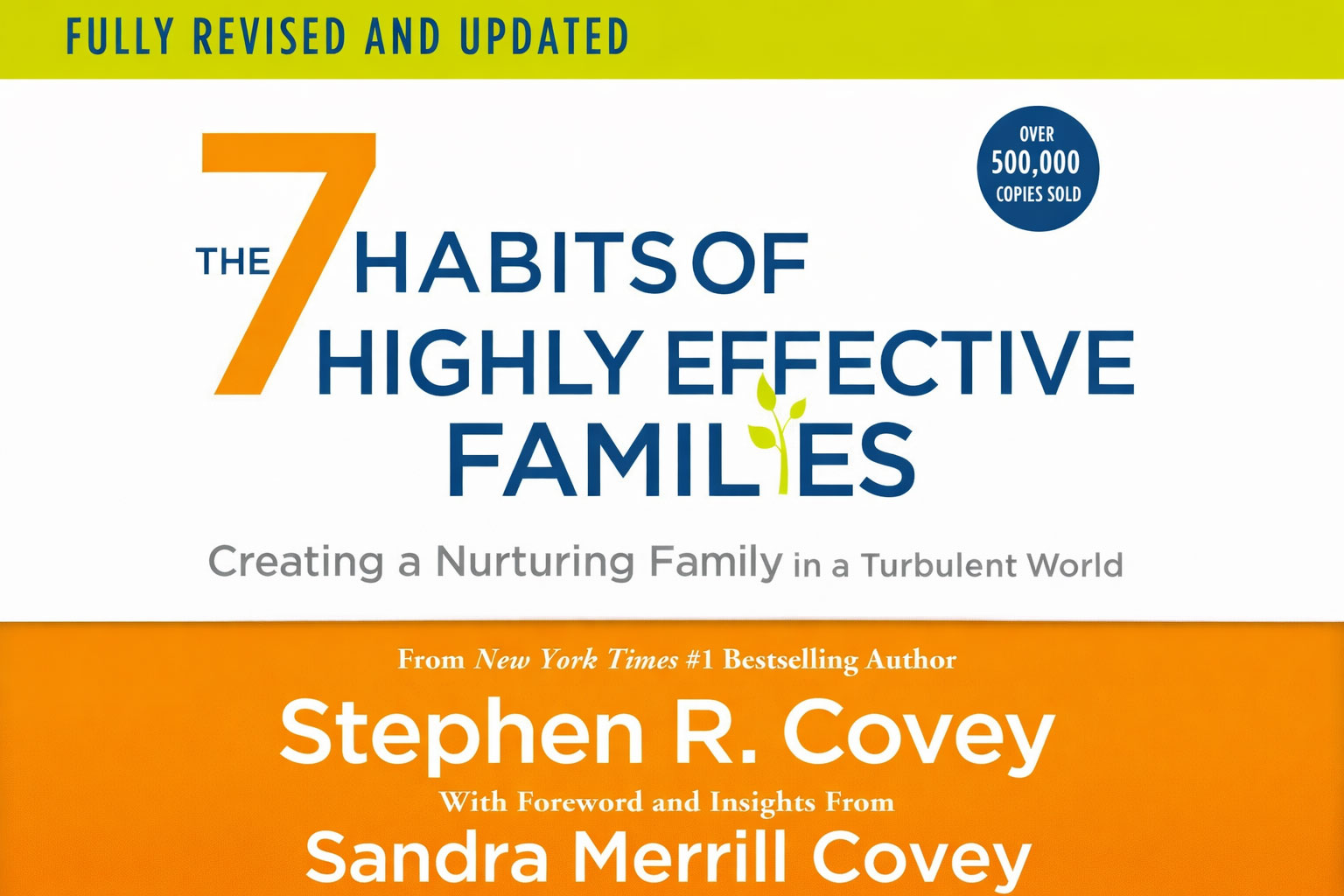

Introduction to the Book
The 7 Habits of Highly Effective Families is one of the most impactful family and personal development books by Stephen R. Covey. It can be seen as a practical extension of his famous “7 Habits” framework, but instead of focusing on individuals or business success, this book centers on family life—the most important foundation of all.
In today’s fast-paced world, where work, pressure, and technology consume much of our time, family connections can easily weaken. The 7 Habits of Highly Effective Families serves as a powerful reminder that strong families don’t happen by chance—they are built intentionally, day by day.
What makes this book truly engaging is the way Stephen R. Covey tells stories: simple, honest, and deeply relatable. He doesn’t talk about abstract theories but addresses real-life issues like marital conflicts, parent-child gaps, and the feeling of emotional distance within families.
About the Author – Stephen R. Covey
Stephen R. Covey is one of the world’s leading experts in personal development, leadership, and effectiveness. He is globally recognized for his principle-centered philosophy, which emphasizes long-term values over short-term success.
Rather than offering quick fixes, Stephen R. Covey focuses on building a strong inner foundation based on integrity, responsibility, and respect.
In The 7 Habits of Highly Effective Families, Stephen R. Covey goes beyond theory and shares personal stories—including his own challenges and mistakes as a father and husband. This authenticity makes the book feel more like guidance from a mentor than a lecture from an expert.
You may also like
>>>Top 7 Young Adult Books Every Teen & Adult Should Read
>>>Top 8 Relationship Books to Transform Your Connections
Main Content and Core Ideas
Unlike a traditional story-driven book, The 7 Habits of Highly Effective Families is structured around seven core habits that help families become stronger, more connected, and more resilient.
Overview of the 7 Habits
The seven habits represent a journey:
- From mastering yourself
- To improving relationships
- To achieving long-term family growth
1. Be Proactive – The Foundation of Change
According to Stephen R. Covey, every positive change in a family begins with the individual. Instead of blaming others or circumstances, each member must take responsibility for their actions and emotions.
For example, during a conflict, choosing a thoughtful response instead of a reactive outburst can transform the entire dynamic.
2. Begin with the End in Mind – Create a Family Vision
One of the most powerful concepts in The 7 Habits of Highly Effective Families is the idea of a “family mission statement.”
Stephen R. Covey encourages families to define their core values together:
What kind of family do we want to be? What truly matters to us?
Having a shared vision helps guide decisions and strengthens unity.
3. Put First Things First – Prioritize What Matters
A major issue in modern families is the lack of quality time.
The 7 Habits of Highly Effective Families emphasizes that it’s not about “having time” but “making time.” Simple moments—like family meals, conversations, or walks together—play a crucial role in building strong bonds.
You may also like
>>>Top 8 Educational Literature Books Every Teacher Should Read in 2026
>>> Top 9 Best Business Books That Will Change Your Life—and Your Career—Forever
4. Think Win-Win – No One Loses in a Family
Stephen R. Covey presents a deeply human idea: in a family, there should be no winners or losers.
Instead, the goal is to find solutions where everyone feels respected and valued. This is especially important in parenting, where authority is often mistaken for understanding.
5. Seek First to Understand, Then to Be Understood – The Key to Connection
Many family conflicts don’t come from big problems but from a lack of true listening.
The 7 Habits of Highly Effective Families teaches us to listen not to reply, but to understand. When people feel heard, they naturally become more open and connected.
6. Synergize – Turn Differences into Strengths
Every family member is unique. Instead of seeing differences as sources of conflict, Stephen R. Covey encourages embracing them as strengths.
When differences are respected and combined, families become stronger and more creative in solving problems.
7. Sharpen the Saw – Continuous Growth
The final habit focuses on constant improvement.
Families are not static—they require ongoing care, renewal, and growth. Whether it’s emotional connection, communication, or shared activities, continuous effort keeps relationships alive and meaningful.
Key Highlights and Unique Value
Highly Practical and Relatable
One of the greatest strengths of The 7 Habits of Highly Effective Families is its real-life applicability. The stories feel familiar, making it easy for readers to reflect on their own family situations.
Focus on Long-Term Values
Unlike many self-help books that offer quick tips, Stephen R. Covey emphasizes building a strong foundation. This approach leads to deeper and more sustainable relationships.
Universally Applicable
No matter your culture or background, the principles in The 7 Habits of Highly Effective Families remain relevant. Family, at its core, shares universal emotional needs and values.
Long-Lasting Impact on Mindset
This book doesn’t just improve family relationships—it changes how you see life. By applying Stephen R. Covey’s principles, you become more patient, understanding, and intentional.
Read more
>>> Top 8 Relationship Books to Transform Your Connections
Who Should Read This Book
The 7 Habits of Highly Effective Families is ideal for:
- People who feel their family lacks connection
- Couples who want to strengthen their relationship
- Parents who want to better understand their children
- Young adults preparing for future family life
- Anyone interested in long-term personal growth
No matter your stage in life, this book offers meaningful insights and practical tools.
Final Thoughts
The 7 Habits of Highly Effective Families is not just a book to read—it’s a guide to live by. The principles shared by Stephen R. Covey are simple but require consistency to apply.
In a world full of distractions and pressure, family remains the most valuable source of peace and support. And this book serves as a powerful companion in building and maintaining that foundation.
If there is one key message to take away from Stephen R. Covey, it is this:
A happy family is not a matter of luck—it is the result of daily choices and intentional effort.
You may also like