Educated: A Memoir – Tara Westover- One of the books on Bill Gates’s list of best books of 2018.

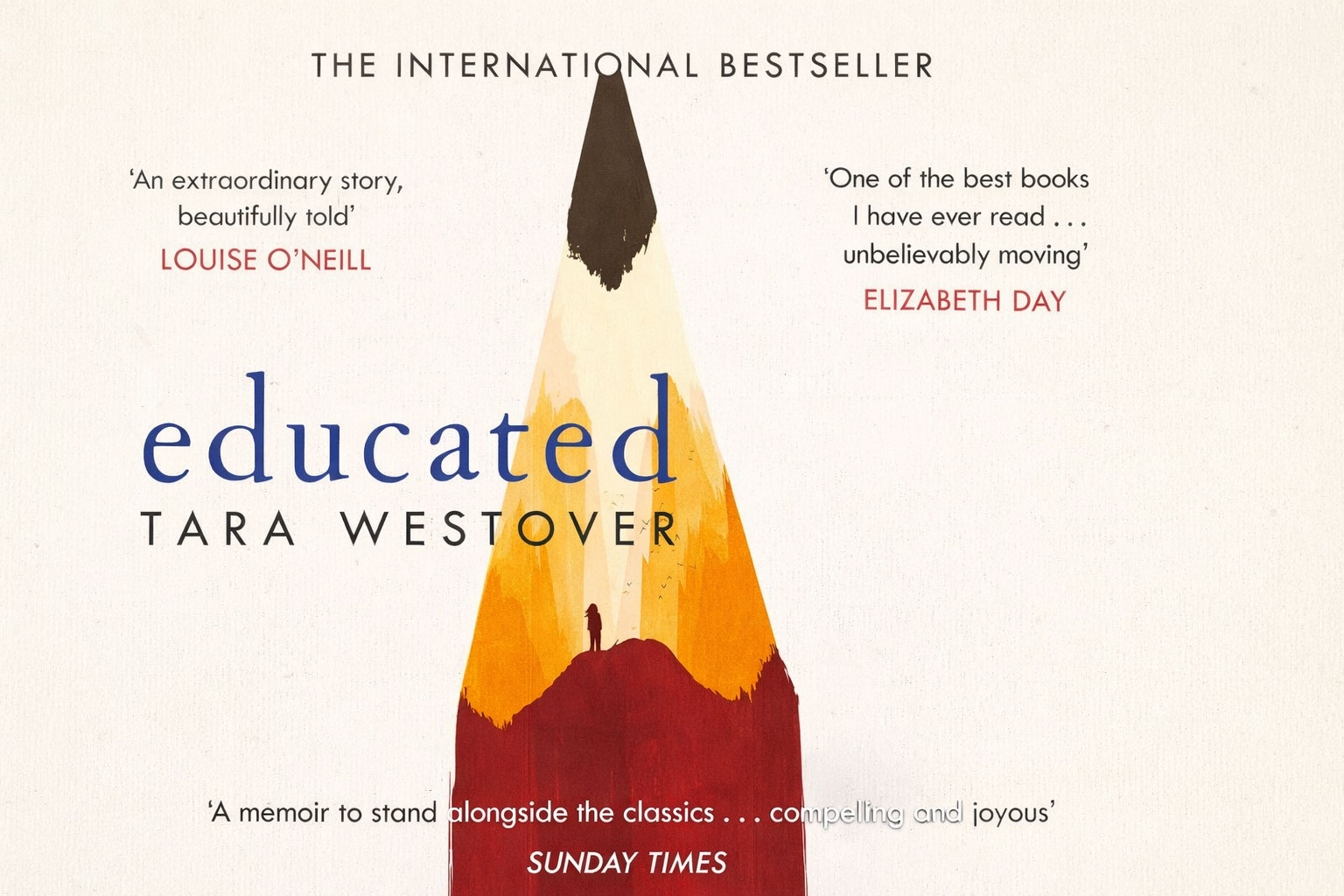
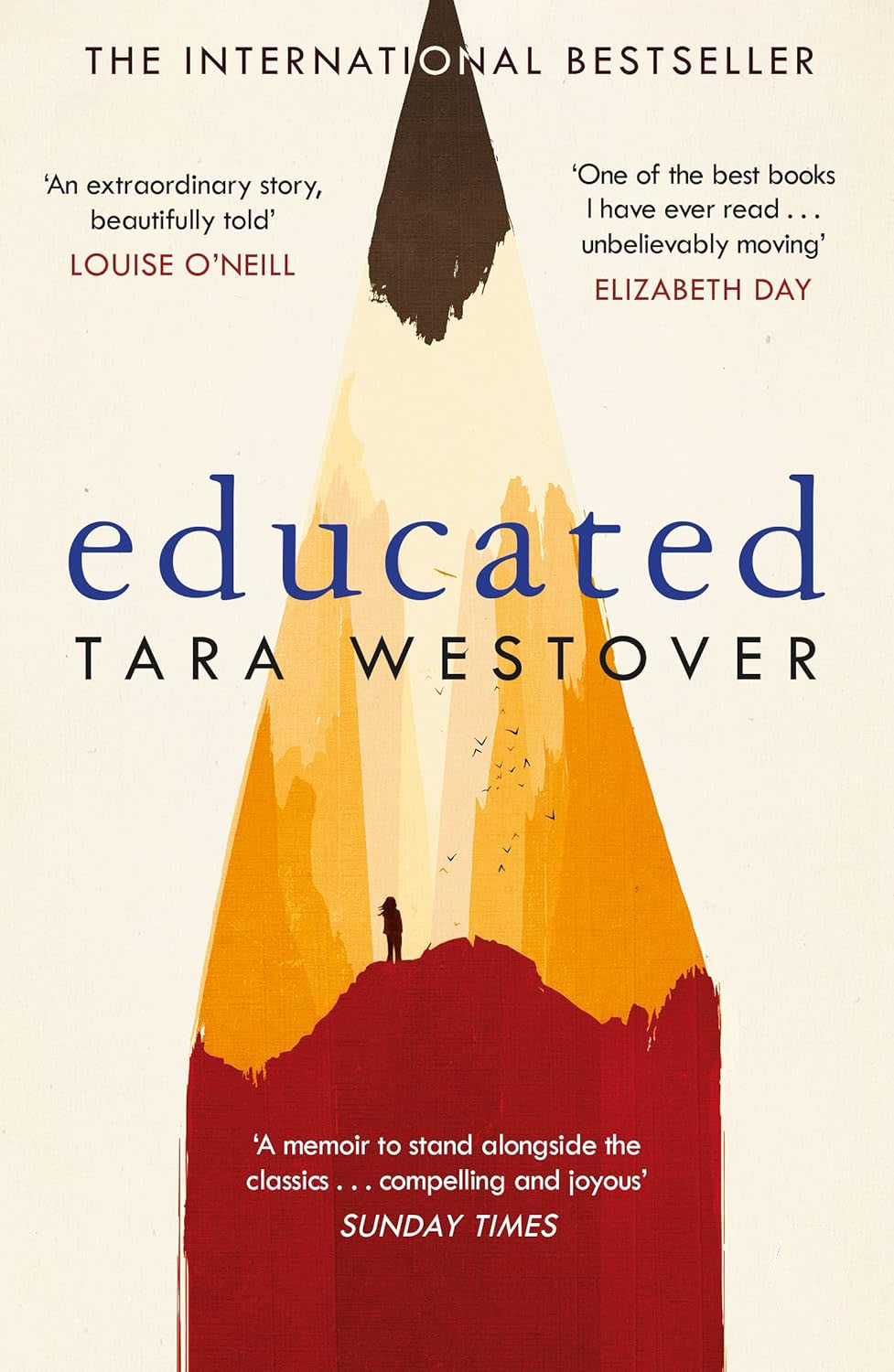
Why Educated Is One of the Most Important Memoirs of the 21st Century
Since its publication in 2018, Educated: A Memoir by Tara Westover has become a global publishing phenomenon. The book spent months at the top of The New York Times bestseller list, received critical acclaim from The Guardian, Time, and The New Yorker, and has been translated into more than forty languages worldwide.
Yet Educated is not simply another “overcoming adversity” success story. It is a deeply unsettling and intellectually honest memoir that explores what education truly means—not as formal schooling, but as the painful process of learning to question inherited beliefs, confront family loyalty, and reconstruct one’s identity.
This is a book about transformation, but also about loss. And that tension is precisely what gives Educated its lasting power.
Overview of Educated: A Memoir
Growing Up Outside Modern Society
Tara Westover was born and raised in Clifton, in the northwestern U.S. state of Idaho. Growing up in a family of seven siblings, Tara was raised to prepare for the end of days; every summer, the family canned peaches to stockpile supplies. Tara’s parents believed that human civilization was on the brink of collapse. Their distrust of the federal government was extreme: their children were not issued birth certificates, were not allowed to attend public school, and were never vaccinated.
The family’s extremism went so far that they completely avoided doctors; when severe accidents occurred, all treatment was carried out at home, and no one was ever taken to a hospital. Everything Tara was taught from childhood came from the Bible, but filtered through the lens of her authoritarian father. She had few friends, apart from the children of families who shared the same faith. In the United States of the late 20th and early 21st centuries, Tara’s family survived on the work of her father and brothers at a junkyard—where she herself was often required to labor as well—while her mother earned additional income as an unlicensed midwife and by selling homemade essential oils.
As a result, Tara:
- Was never enrolled in school
- Had no birth certificate or medical records
- Never saw a doctor or dentist during her childhood
- Lacked any formal education until her late teens
Until the age of 17, Tara Westover lived almost entirely outside the structures most people consider fundamental to modern life.
The First Turning Point: Self-Education and Entry into University
Tara’s decision to teach herself enough mathematics, grammar, and science to pass the ACT and gain admission to Brigham Young University (BYU) marked the first major rupture in her life.
However, the challenge was not merely academic.
When Tara entered university, she faced:
- Severe gaps in basic historical and scientific knowledge
- Profound cultural disorientation
- A deep sense of shame and intellectual inferiority
She did not know what the Holocaust was. She had no understanding of civil rights movements or world history. More importantly, she had never been taught how to evaluate information critically.
Education, for Tara, began as alienation before it became empowerment.
Read more:
>>>Top 8 Educational Literature Books Every Teacher Should Read in 2026
Education in Educated: Learning to Question as an Act of Freedom
One of the central ideas of Educated is that education is not the accumulation of facts, but the development of independent judgment.
True education begins when inherited truths are no longer accepted without examination.
As Tara progressed academically—eventually studying at Harvard University and earning a PhD from Cambridge University—she was forced to confront a painful reality: the worldview she had been raised in was not merely incomplete, but often dangerously false.
Education required her to:
- Question her father’s authority
- Reevaluate childhood memories
- Recognize patterns of abuse previously normalized as discipline or faith
Each academic step forward created emotional distance from her family. Knowledge did not simply expand her world—it dismantled the only one she had ever known.
Family, Loyalty, and Moral Conflict
One of the most powerful elements of Educated is its refusal to portray family relationships in simplistic terms.
Westover does not depict her parents as villains or herself as a pure victim. Instead, she presents family as a space where love, devotion, fear, and violence coexist.
Her father is both charismatic and tyrannical.
Her mother is compassionate yet complicit through silence.
Her brother is protective at times, abusive at others.
The memoir raises a deeply uncomfortable question:
Can love exist in relationships that cause harm?
And perhaps more painfully:
Is it possible to leave your family without betraying them?
Memory, Truth, and the Limits of Memoir
Following its publication, Educated became the subject of controversy when several members of Westover’s family publicly disputed her account. Rather than undermining the book, this controversy reinforces one of its central themes: memory is subjective.
Westover explicitly acknowledges that:
- Her memories may be flawed
- Others may remember events differently
- A memoir is not an objective historical record
By doing so, Educated becomes not a declaration of absolute truth, but a meditation on how truth is constructed—and who has the power to define it.
Writing Style: Restraint Over Sensationalism
Unlike many trauma memoirs, Educated avoids melodrama. Westover’s prose is:
- Controlled and precise
- Emotionally restrained
- Intellectually reflective
This restraint makes scenes of neglect and violence more disturbing, not less. The absence of overt emotional manipulation invites readers to draw their own conclusions—and to sit with discomfort rather than being guided away from it.
The writing reflects Westover’s academic training without sacrificing accessibility.
The Deeper Meaning of Educated
At its core, Educated does not argue that education guarantees happiness or success.
Instead, it suggests that education:
- May lead to isolation
- Can fracture families
- Often requires profound sacrifice
What it offers in return is intellectual autonomy—the ability to decide what to believe and who to become.
This is not a comforting message. But it is an honest one.
Is Educated Worth Reading?
Recommended for readers who:
- Are interested in education and critical thinking
- Enjoy psychologically complex memoirs
- Have experienced tension between family loyalty and personal growth
May not suit readers who:
- Prefer light or purely inspirational reading
- Are sensitive to themes of domestic abuse
- Expect clear moral resolutions
Overall Rating
Rating: 4.7 / 5
Educated: A Memoir stands among the most significant memoirs of the modern era—not because of its academic achievements, but because of its courage in confronting uncomfortable truths.
It challenges readers to ask:
Which of my beliefs are truly mine—and which were simply inherited?
Final Thoughts
If you are looking for a book that:
- Explores education beyond classrooms
- Examines the cost of independence
- Lingers in the mind long after the final page
Then Educated: A Memoir by Tara Westover is not just worth reading—it is essential.