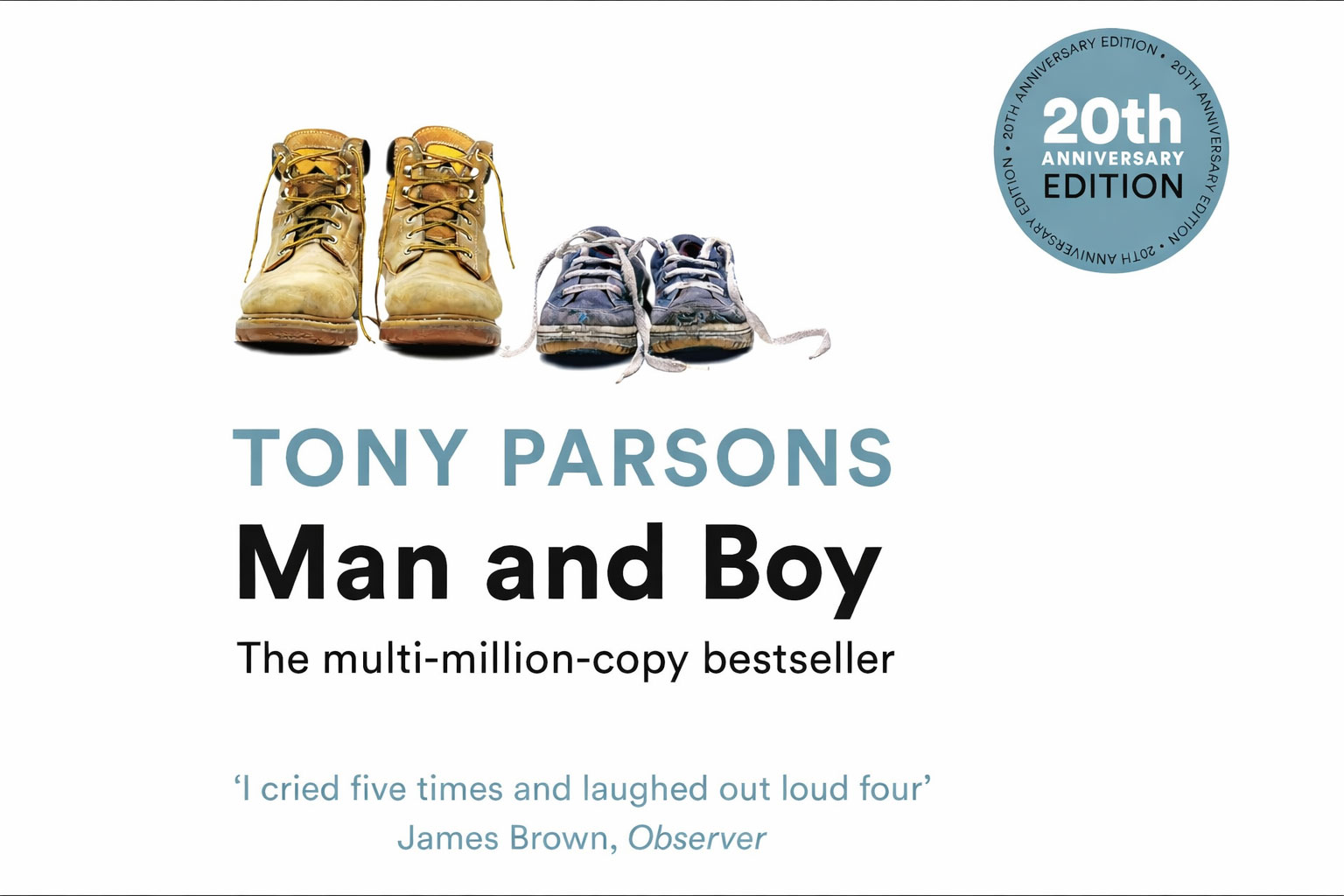

Man and Boy by Tony Parsons: A Profound Novel About Fatherhood, Responsibility, and the Late Education of Men
Why Man and Boy Remains a Modern Classic of Family Fiction
In contemporary British fiction, few novels have captured the emotional reality of modern fatherhood as honestly and enduringly as Man and Boy (1999) by Tony Parsons. At first glance, the book appears deceptively simple—a domestic novel about a man whose life falls apart after a moment of infidelity. But beneath its accessible prose lies a deeply human story about responsibility, emotional immaturity, generational inheritance, and the quiet heroism of showing up for the people who depend on you.
Awarded British Book of the Year and translated into dozens of languages, Man and Boy has sold millions of copies worldwide. Its success is not rooted in dramatic plot twists or literary experimentation, but in something far rarer: emotional truth. Tony Parsons writes about ordinary people facing ordinary failures—and discovering that the consequences of those failures are anything but ordinary.
At its core, Man and Boy is not just a novel about being a father. It is a novel about becoming a man too late—and learning that it is still not too late at all.
Overview: A Life Unraveling, Then Rebuilding (Spoiler-Light)
The protagonist, Harry Silver, is a television producer in London approaching his thirtieth birthday. From the outside, Harry appears to have everything that defines success in modern urban life: a stable career, a beautiful and intelligent wife named Gina, and a four-year-old son, Pat, who adores him.
But Harry is emotionally complacent, self-satisfied, and dangerously unaware of how fragile his happiness truly is.
One impulsive mistake—an affair with a colleague—sets off a chain reaction that dismantles his life with brutal efficiency. Gina leaves him to pursue a career opportunity in Japan. Harry loses his job. And most unexpectedly, he finds himself alone with Pat, forced into the role of a single father—a role he has never prepared for and barely understands.
As Harry struggles with childcare, unemployment, loneliness, and guilt, he is also haunted by memories of his own father, who died from cancer years earlier. The man Harry once admired but never fully understood becomes an ever-present ghost, silently judging and guiding him as Harry attempts to raise a son of his own.
What follows is not a redemption fantasy, but a painfully realistic portrait of growth: slow, uncomfortable, and frequently humiliating.
The Central Theme: Responsibility as the True Measure of Adulthood
Growing Up Is Not About Age—It Is About Accountability
One of the most powerful ideas in Man and Boy is its rejection of the notion that adulthood arrives automatically with age, marriage, or parenthood. Harry Silver is thirty years old, married, and a father—and yet, at the novel’s beginning, he is profoundly immature.
Tony Parsons does not portray Harry as cruel or malicious. Instead, Harry is emotionally underdeveloped. He avoids difficult conversations, seeks validation outside his marriage, and assumes that the structures supporting his life—his wife, his job, his family—are permanent.
The novel’s moral center is clear:
Adulthood begins not when life goes according to plan, but when you accept responsibility for the damage you have caused.
Harry’s journey is not about becoming extraordinary. It is about becoming reliable.
Fatherhood Without the Myth: Learning to Care Through Failure
Fatherhood as Practice, Not Instinct
Unlike many sentimental portrayals of parenthood, Man and Boy refuses to romanticize the role of the father. Harry does not suddenly discover a hidden well of paternal wisdom. He is clumsy, frustrated, and frequently overwhelmed.
He does not know:
- How to cook proper meals for a child
- How to manage routines
- How to explain loss, absence, or adult emotions in language a child can understand
Parsons emphasizes that fatherhood is learned, not inherited. Harry’s love for Pat is immediate, but love alone proves insufficient. Care requires discipline, sacrifice, and emotional presence—qualities Harry must consciously develop.
The novel quietly dismantles the idea that masculinity is incompatible with caregiving. Instead, it suggests that caregiving is one of the most demanding—and transformative—forms of masculinity there is.
Pat: The Moral Compass of the Novel
Innocence as a Source of Strength
Pat, Harry’s young son, is not merely a supporting character. He is the novel’s emotional anchor. Unlike the adults around him, Pat does not moralize. He does not resent. He does not judge.
What Pat needs is simple:
- Stability
- Attention
- Love that does not disappear
Through Pat, Parsons illustrates a fundamental truth of parenting: children do not need perfection—they need presence.
Every decision Harry makes is ultimately filtered through a single question: What does this mean for my son? It is this shift—from self-centered thinking to relational thinking—that marks the beginning of Harry’s transformation.
When Children Teach Adults How to Grow Up
One of the novel’s quiet revelations is that parenting is not a one-way transfer of wisdom. Pat forces Harry to slow down, to listen, and to confront emotions he would otherwise avoid.
In this sense, Man and Boy suggests that children often complete the emotional education their parents never received.
The Shadow of the Father: Generational Memory and Masculine Inheritance
Understanding One’s Father Too Late
Interwoven with Harry’s present struggles are memories of his own father—a man Harry loved deeply but never fully comprehended. Only after becoming a father himself does Harry begin to understand the emotional weight his father carried.
This retrospective understanding is one of the novel’s most poignant elements. Parsons explores a painful universal experience: realizing, too late, that our parents were not merely authority figures, but flawed human beings making sacrifices we never noticed.
The novel asks an uncomfortable question:
How many men only understand their fathers once they become fathers themselves?
Breaking—or Repeating—the Cycle
Harry fears becoming his father, even as he unconsciously mirrors him. The novel does not offer a clean resolution to this tension. Instead, it acknowledges the complexity of generational inheritance: we are shaped by those who raised us, whether we wish to be or not.
What matters, Parsons suggests, is awareness.
Top 8 Must-Read Books on Family and Relationships of All Time
Tony Parsons’ Writing Style: Direct, Honest, and Emotionally Precise
Plain Language, Deep Impact
Tony Parsons writes with a journalistic clarity that resists literary pretension. His sentences are short, often blunt, and emotionally transparent. This stylistic choice reinforces the novel’s themes: growth is not glamorous, and neither is honesty.
The simplicity of the prose allows the emotional weight of the story to emerge naturally. Readers are not instructed how to feel—they discover their feelings alongside Harry.
Humor as Emotional Relief
Despite its heavy themes, Man and Boy is frequently funny. Parsons uses dry humor and self-deprecation to prevent the novel from collapsing into melodrama.
This tonal balance—between heartbreak and humor—is one of the book’s greatest strengths. Life, Parsons reminds us, is rarely tragic without also being absurd.
Strengths of Man and Boy
- Authentic portrayal of male vulnerability without sentimentality
- Complex but relatable protagonist
- Nuanced exploration of fatherhood in a modern context
- Accessible prose with lasting emotional resonance
- Strong generational themes that deepen the narrative
Limitations and Criticisms
No novel is without its shortcomings.
Some readers may find:
- The plot relatively predictable
- The domestic focus slow-paced
- Certain emotional beats familiar to contemporary family fiction
However, these criticisms largely reflect reader preference rather than narrative failure. Man and Boy does not aim to surprise—it aims to tell the truth well.
Who Should Read Man and Boy?
This novel is particularly resonant for:
- Fathers and expectant fathers
- Readers interested in masculinity and emotional growth
- Fans of character-driven literary fiction
- Anyone navigating family, regret, or responsibility
It is especially powerful for male readers, offering a rare depiction of men grappling openly with emotional inadequacy and growth.
Critical Reception and Cultural Impact
Upon publication, Man and Boy received widespread acclaim for its emotional honesty and accessibility. Critics praised Parsons’ ability to write about male vulnerability without irony or cynicism.
The novel’s popularity signaled a shift in mainstream fiction—a recognition that stories about domestic life and emotional labor are not marginal, but central to the human experience.
Final Evaluation
Man and Boy succeeds not because it offers solutions, but because it asks the right questions. It does not promise redemption—it depicts responsibility.
It reminds readers that:
- Love requires action
- Growth is uncomfortable
- And showing up matters more than getting it right
Conclusion: A Quietly Devastating Novel That Stays With You
If Man and Boy can be summarized in a single idea, it is this:
Becoming a good father is not about instinct or perfection—it is about choosing responsibility every day.
Tony Parsons has written a novel that feels deeply personal yet universally familiar. By the final page, readers are left not with answers, but with reflection—about their parents, their children, and the people they might still become.
It is a novel that does not demand tears—but earns them.