Why Educational Literature Still Matters Today
In a world where learning never stops, exploring the most influential works in educational literature is one of the fastest ways to elevate your teaching mindset, reshape classroom engagement, and understand how students truly learn. Whether you’re an educator refining your methods, a parent seeking deeper insight into child development, or a student of pedagogy looking for timeless guidance, the right books can transform your approach to knowledge.
In this blog, we highlight the top 8 must-read titles in educational literature—from groundbreaking theories that shaped modern education to practical strategies trusted by today’s leading teachers. Each book offers valuable lessons that help bridge the gap between theory and practice, empowering you to inspire curiosity, build meaningful learning experiences, and make a lasting impact in the 21st-century classroom. Let’s dive into the essential voices and ideas every educator should know.
Top 8 Books in Educational Literature
Educated – Tara Westover

A Modern Classic of Educational Literature
Educated by Tara Westover is widely recognized as a groundbreaking memoir and a defining title in educational literature. While many books explore traditional schooling or academic achievement, Westover’s work goes far deeper—she chronicles the emotional and intellectual battle of becoming educated without ever attending school until age 17. Her journey from a remote survivalist family in Idaho to earning a PhD from Cambridge transforms the book into more than a memoir: it becomes a compelling statement about the meaning and value of education itself.
Overview
Raised in a fiercely conservative and isolated household, Tara grows up without formal schooling, medical care, or social interaction. Her parents distrust institutions and believe self-reliance is the only path to survival. Despite these limitations, she nurtures an inner desire to learn—first through books, then through self-study. This drive eventually leads her to higher education, where she confronts not only academic challenges but also deeply rooted emotional conflicts and the painful distance growing between her and her family.
Why Educated Stands Out in Educational Literature
- A Transformative Definition of Education
Unlike many titles categorized as educational literature, Educated emphasizes that learning is not limited to classrooms or degrees. It shows education as a lifelong, personal transformation—an expansion of perspective that enables Tara to rethink her identity, history, and relationship with the world.
- The Power of Self-Directed Learning
The memoir highlights how self-motivation can rival formal education. Tara teaches herself algebra, history, writing, and critical thinking, proving that curiosity and discipline can create extraordinary academic outcomes even without structure. For readers of educational literature, this reinforces the belief that education begins internally, not institutionally.
- Honest Reflections on Family, Trauma, and Growth
One of the book’s most compelling qualities is its honesty. Tara narrates emotional abuse, manipulation, and conflicting loyalties without turning her story into blame or victimhood. This depth gives the memoir unusual weight within educational literature, connecting intellectual growth with emotional maturity.
- Emotional Writing and Narrative Flow
Westover’s writing blends clarity, vulnerability, and poetic detail. Her reflective tone allows readers to feel her transformation rather than merely observe it. This style makes the memoir accessible both to general audiences and to readers seeking meaningful educational literature with narrative richness.
Potential Drawbacks for Readers
Although widely praised, Educated may not appeal equally to all readers:
- Some may expect more academic insights instead of personal storytelling.
- The repeated focus on family tension can feel emotionally heavy.
- Readers familiar with traditional educational literature may find fewer structural discussions of schooling systems or pedagogy.
However, these aspects also reinforce the memoir’s uniqueness—it prioritizes inner education, not institutional analysis.
Conclusion: A Must-Read in Modern Educational Literature
Educated is more than a bestselling memoir—it is a landmark of educational literature that challenges readers to rethink what “being educated” truly means. Through Tara Westover’s story, we see that education is not only about knowledge, but about courage: the courage to question, to change, and to rebuild oneself from the inside out.
For anyone interested in self-development, personal growth, and the transformative power of learning, Educated is essential reading—an unforgettable reminder that education can be both a path to freedom and a battle for identity.
Encouragement of Learning – Yukichi Fukuzawa

Encouragement of Learning—originally titled Gakumon no Susume—is one of the most influential works in Japanese intellectual history. First published in 1872 during Japan’s rapid transition from feudalism to modernization, the book served as a powerful manifesto promoting education, individual autonomy, and national progress. Yukichi Fukuzawa, often regarded as a founding figure of modern Japan, uses this collection of essays to redefine the role of learning in shaping both personal growth and societal advancement.
Equality Through Knowledge
The book opens with Fukuzawa’s iconic statement: “Heaven does not create one man above or below another.” According to him, distinctions among people are not determined by birth or class, but by the level of education and willingness to learn. This idea challenged long-standing feudal hierarchies and inspired generations to believe in self-development and social mobility through learning.
In this sense, the book is not just about studying—it is a declaration of intellectual equality and personal empowerment.
Learning as Practical Action
Fukuzawa rejects passive or rote memorization, which he saw as limiting and unproductive. Instead, he advocates for practical, applicable knowledge that improves daily life, expands opportunities, and strengthens character. Studying should not be confined to academic theory—it should equip individuals with the ability to solve real-world problems, think critically, and contribute meaningfully to society.
The Spirit of Independence
Another central message is self-reliance. Fukuzawa argues that true independence—both personal and national—depends on intellectual maturity. Those who lack education are easily influenced, become dependent on others, and struggle to control their own destiny. Knowledge, therefore, becomes a path to freedom: educated individuals can make informed choices, take responsibility, and participate confidently in public life.
Education as a Foundation for National Strength
Beyond personal development, Encouragement of Learning also presents a clear vision for national progress. Fukuzawa believed that a modern nation required an educated population capable of innovation and civic participation. Raising the general level of knowledge would help Japan remain independent and competitive on the global stage, especially during a time when Western powers were expanding their influence.
Style and Accessibility
Despite being over 150 years old, the book remains surprisingly accessible. Fukuzawa writes with clarity, directness, and conviction, allowing readers to engage easily with complex ideas. His tone is persuasive rather than dogmatic—encouraging readers to question outdated customs and embrace critical thinking.
Who Should Read This Book?
Encouragement of Learning is ideal for:
- Students and young adults seeking motivation and direction in personal development
- Readers interested in educational philosophy, social reform, or Japanese modernization
- Anyone who values lifelong learning and intellectual independence
Conclusion
More than a historical document, Encouragement of Learning remains a powerful guide to self-improvement and social contribution. Fukuzawa’s belief that knowledge enables independence continues to resonate in today’s world, where adaptability, critical thinking, and continuous learning are keys to success.
The book stands as a reminder that education is not merely the accumulation of facts—it is a pathway to personal freedom, social equality, and meaningful progress.
Angela’s Ashes – Frank McCourt

Angela’s Ashes by Frank McCourt remains one of the most influential works in modern educational literature, offering readers a raw, unforgettable portrait of childhood shaped by poverty, resilience, and the transformative power of learning. First published in 1996 and awarded the Pulitzer Prize, this memoir has become essential reading for anyone interested in how early life experiences form identity, ambition, and empathy.
A Memoir Rooted in Hardship — and Hope
The opening line — “When I look back on my childhood I wonder how I survived at all.” — perfectly captures the spirit of Angela’s Ashes. McCourt recounts his early years between Brooklyn, New York, and Limerick, Ireland, where hunger, illness, and humiliation were daily realities.
Yet rather than descending into despair, the book shows how curiosity, storytelling, and education become tools for survival. This focus on knowledge as liberation is what places Angela’s Ashes firmly within educational literature: it demonstrates that learning is not just academic — it is profoundly human.
Poverty as a Shaping Force
McCourt’s depiction of poverty goes far beyond a lack of food or clothing. It becomes:
- A cycle that traps generations,
- A source of lifelong shame,
- And a barrier that only education can break.
Readers witness the emotional and psychological weight of being poor, but also the inner strength required to keep moving forward. For students and teachers exploring educational literature, this memoir provides a compelling example of how literacy and storytelling can empower individuals to reshape their futures.
Family Bonds: Painful, Flawed, Unforgettable
One of the most memorable elements of the book is McCourt’s relationship with his father, Malachy. Loving yet unreliable, poetic yet self-destructive, Malachy represents both the warmth of Irish heritage and the tragedy of alcoholism. His inability to provide forces young Frank to grow up quickly — a common theme in educational literature centered on resilience.
In contrast, Angela, his mother, embodies perseverance. Her sacrifices give the memoir its emotional core, reminding readers that survival often depends on the quiet strength of caregivers.
Narrative Style: Humor in the Darkness
McCourt’s voice makes Angela’s Ashes stand out from other works in educational literature. Despite the bleak circumstances, he writes with dry humor, vivid imagery, and a childlike honesty that softens the harshest moments. This balance allows readers to experience suffering without feeling overwhelmed — a skill that makes the memoir both readable and deeply insightful for classroom discussion.
Core Concepts
- The redemptive role of education
- Personal dignity in the face of injustice
- Family, faith, and moral ambiguity
- Identity shaped through storytelling
These themes make Angela’s Ashes relevant not only as a personal narrative, but also as a foundational text in educational literature used to explore literacy, social inequality, and emotional intelligence.
Maria Montessori: Her Life and Work – E.M.Standing

Maria Montessori: Her Life and Work is one of the most influential and enduring biographies of Maria Montessori, written by E. M. Standing — her long-time assistant and collaborator for over 30 years. This close professional relationship allows Standing to present not only a historical account of Montessori’s life, but also a deeply informed interpretation of her educational philosophy.
Overview
First published in 1962 and reprinted many times since, the book blends biographical narrative with conceptual analysis, making it accessible both to newcomers and experienced educators. Standing traces Montessori’s development from a determined young woman breaking into the male-dominated world of medicine in Italy, to an international figure who transformed early childhood education.
Key Themes and Structure
- A Detailed Life Story
Standing provides rich descriptions of Montessori’s childhood, medical training, and her groundbreaking work at Casa dei Bambini, the first Montessori school in Rome. The book follows her travels, lectures, and tireless advocacy for child-centered learning across Europe, India, and the United States. Through these accounts, readers gain insight into how personal conviction, scientific curiosity, and social challenges shaped her work.
- The Montessori Philosophy Explained
Beyond biography, the book explores key principles that define the Montessori method:
- the absorbent mind and sensitive learning periods
- freedom with responsibility
- the prepared environment as a “teacher”
- the evolving role of the educator as a guide rather than an authority
Standing explains Montessori’s ideas in clear, thoughtful language, illustrating why her method remains relevant in modern classrooms.
Verdict
Maria Montessori: Her Life and Work remains a cornerstone text for anyone interested in the origins and essence of Montessori education. It is not only a biography, but also an intellectual gateway to Montessori’s pioneering vision of the child as an active, capable learner.
Recommended for:
- Parents exploring Montessori for the first time
- Teachers and education students seeking historical context
- Readers researching influential thinkers in childhood education
Those looking for more critical or contemporary perspectives may want to supplement this book with recent scholarly analyses — but Standing’s work is still an essential starting point
You may also like
>>>Top 9 Best Business Books That Will Change Your Life—and Your Career—Forever
>>>Top 8 Relationship Books to Transform Your Connections
The Trunk – Kim Ryeo-ryeong

The Trunk by Kim Ryeo-ryeong stands out as a compelling work of modern educational literature, combining contemporary storytelling with powerful social reflections. Originally published in Korean in 2015 and recently translated into English, the novel examines the complexities of love, identity, and the evolving meaning of marriage in today’s society. With its unique premise and character-driven narrative, The Trunk invites readers to rethink the value systems shaping modern relationships.
Overview
At the heart of The Trunk is Noh Inji, a woman who becomes a “contract wife” through a secretive matchmaking agency that rents out spouses to wealthy clients. Each temporary marriage leaves Inji with emotional fragments stored metaphorically and physically inside a single trunk—symbolizing both her transient lifestyle and the weight of her past.
Although the premise may sound like the foundation for romantic drama, the novel’s true strength lies in how it transforms this setup into educational literature that explores societal expectations, personal agency, and emotional labor within modern relationships.
Themes: Social Commentary Wrapped in Intimate Storytelling
Kim Ryeo-ryeong uses Inji’s journey to address issues central to contemporary life:
- Shifting cultural attitudes toward marriage
- Women’s autonomy and self-worth
- The emotional consequences of transactional relationships
- The search for identity in a society that prizes conformity
These themes are approached with subtlety, making the novel resonate as educational literature that teaches readers through lived experience rather than didactic instruction. The trunk becomes a recurring metaphor for the emotional baggage we carry and the memories we cannot shake, no matter how temporary our roles in life may seem.
Writing Style and Reading Experience
Kim’s writing is calm, introspective, and sharp. The narrative unfolds slowly, allowing space for character reflection rather than plot twists. Readers expecting thriller-style suspense may find the pace gentle, but those drawn to emotional depth and cultural insight will appreciate the author’s nuanced approach.
The English translation has sparked discussion: while many readers praise its accessibility, others feel some emotional layers of the original Korean text are lost. Still, the novel’s thematic power remains strong, reinforcing why The Trunk fits naturally within the realm of educational literature.
Why The Trunk Matters in Educational Literature
The Trunk is not just a novel about unconventional relationships—it is a reflective journey that encourages readers to question how their own cultures shape ideas of love, commitment, and gender roles. Like many works of educational literature, it provides insight into social patterns while deepening empathy and awareness.
Rather than promoting a single message, the story opens space for interpretation, making it valuable for reading circles, classroom discussions, and book clubs focused on contemporary Asian literature or global social issues.
Final Verdict: Should You Read It?
Read The Trunk if you enjoy:
- Character-driven stories with emotional nuance
- Fiction that blends entertainment with social understanding
- Modern Asian works classified under educational literature
- Open-ended narratives that make you think after the last page
Skip it if you want:
- Fast-paced thrillers
- Clear conclusions without ambiguity
- Plot over introspection
Rating
The Trunk ultimately stands as a significant contribution to educational literature, offering not only a story but a mirror—inviting readers to look inward while questioning the values and pressures shaping modern life.
You may also like
>>>Top 7 Young Adult Books Every Teen & Adult Should Read
>>>Top 10 Best Books for Kids | Buy Popular Children’s Books Online
The Color of Water – James McBride
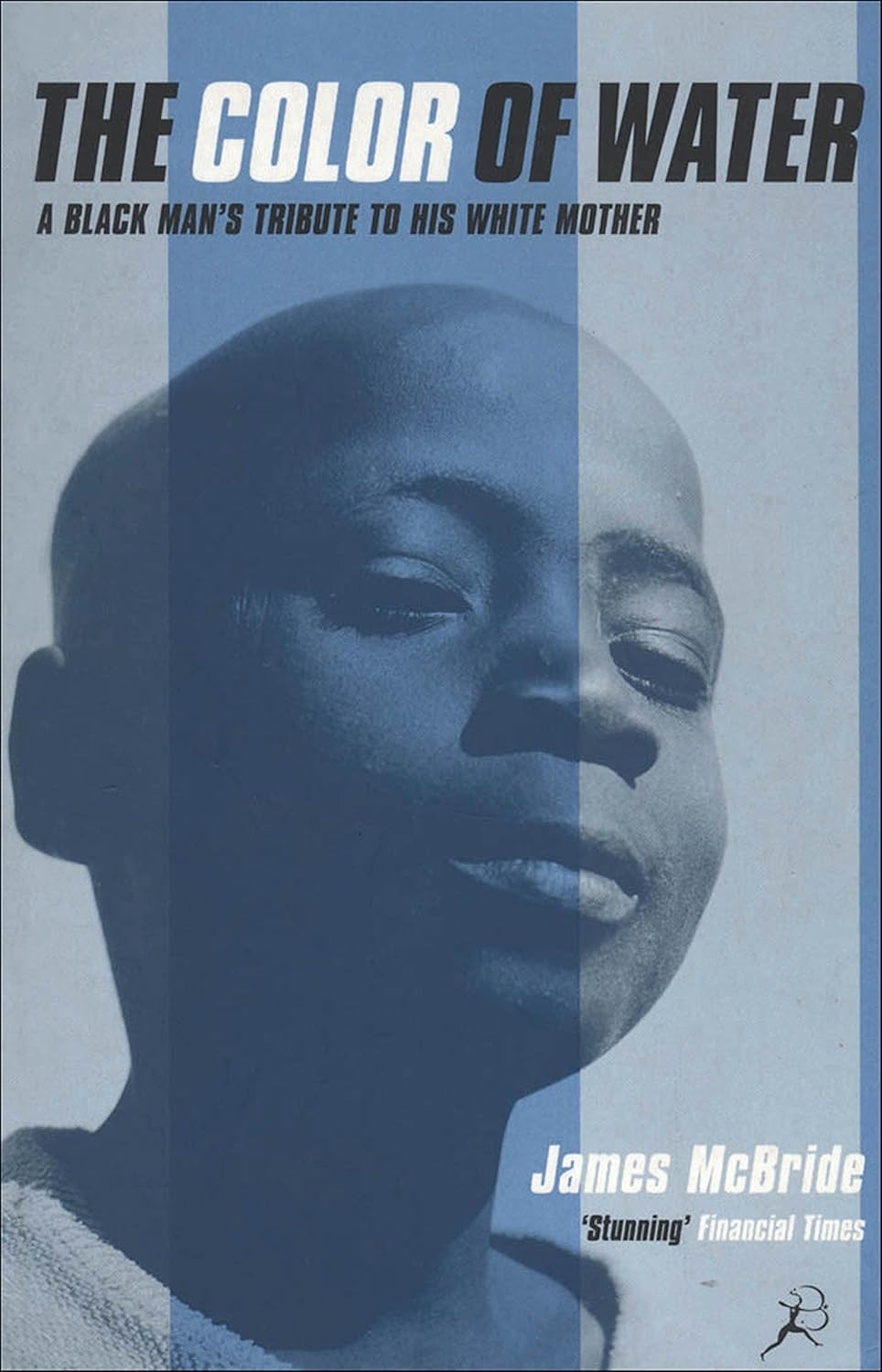
The Color of Water: A Black Man’s Tribute to His White Mother by James McBride stands as one of the most meaningful works of educational literature exploring race, identity, and the transformative power of family and education. Blending memoir and biography, McBride tells two intertwined stories: his own coming-of-age experience as a mixed-race child in America and the extraordinary life journey of his mother, Ruth McBride Jordan, a Jewish woman who challenged the racial and cultural boundaries of her time.
One of the book’s greatest strengths—and what gives it lasting value in educational literature—is its dual narrative structure. Chapters alternate between McBride’s personal struggles with identity and Ruth’s voice recounting her past: escaping an abusive father, rejecting restrictive traditions, and raising twelve children in predominantly Black communities. This alternating perspective not only deepens emotional resonance but also emphasizes how personal history shapes intellectual growth and cultural understanding.
At its core, The Color of Water raises a timeless question central to educational literature: What defines who we are? While young James wrestles with racial ambiguity, Ruth refuses to let skin color define human worth. Her famous line—“God is the color of water”—encapsulates the book’s message: faith, dignity, and education transcend race. Through her sacrifices and strict belief in academic discipline, all twelve of her children attend college, proving how education can break barriers and empower marginalized communities.
This memorable memoir fits perfectly within the broader tradition of educational literature because it teaches readers more than history or sociology—it teaches empathy, perseverance, and the importance of self-acceptance. Themes of racial discrimination, cultural conflict, and maternal love are handled with honesty, humor, and emotional clarity, making the book accessible to students, educators, and lifelong learners.
Who Should Read The Color of Water?
- Readers interested in educational literature about race and identity
- Students and teachers seeking memoirs that encourage critical thinking
- Anyone drawn to stories of resilience, motherhood, and personal growth
- Readers exploring multicultural experiences within American history
Final Verdict
The Color of Water is a cornerstone of modern educational literature, offering profound insight into how love, education, and cultural understanding shape human identity. James McBride’s storytelling not only honors his mother’s legacy but also invites readers to reflect on their own origins and values. It is a must-read for anyone seeking meaningful literature that bridges personal experience with universal lessons.
Read more
>>>Top 3 Free Ai Writer Tools Showdown 2025
Positive Discipline in the Classroom – Jane Nelsen & Lynn Lot (with H. Stephen Glenn)

Positive Discipline in the Classroom is a practical guide that helps teachers create a respectful, cooperative, and responsible classroom community without relying on punishment or reward systems. Instead of controlling student behavior through authority or incentives, the book introduces strategies that promote internal motivation, social-emotional skills, and collaborative problem-solving.
Core Concepts
The book emphasizes that discipline is not about punishment—it is about teaching students to self-regulate, contribute, and take responsibility for their actions.
Teachers are encouraged to build relationships based on mutual respect, where students feel capable, valued, and connected to the classroom community.
At the heart of this approach is the belief that behavior improves when students feel they belong and believe they can make meaningful contributions.
Key Strategies and Classroom Tools
Encouragement over Praise
Instead of praising students to seek approval or rewards, the book teaches teachers to encourage effort and progress, helping students build intrinsic motivation.
Class Meetings
One of the most powerful tools in the book:
- Students and teachers meet regularly to discuss issues
- Everyone participates in finding solutions
- Students develop listening, empathy, and problem-solving skills
Problem-Solving with Students
Rather than “What punishment fits this behavior?”, the mindset becomes:
“What skills does this student need—and how can I teach them?”
Building a respectful classroom environment
Teachers learn how to:
- Foster cooperation instead of competition
- Maintain firmness and kindness
- Support students to evaluate their own behavior and progress
Overall Evaluation
Positive Discipline in the Classroom is one of the most influential guides for educators seeking a humane, respectful, and collaborative way to manage classrooms.
It shifts discipline from control to relationship-building and skill-building, helping classrooms become communities where students are active participants rather than passive rule-followers.
If teachers are willing to invest time and consistency, this book can transform the classroom atmosphere into one where students feel empowered, responsible, and connected.
Emile, or On Education – Jean-Jacques Rousseau
Among the most influential books in educational literature, Emile, or On Education (1762) by Jean-Jacques Rousseau stands as a groundbreaking manifesto on how humans should be raised, taught, and guided toward maturity.
Rather than focusing on institutional systems or state-controlled schooling, Rousseau shifts attention back to the individual child, arguing that true education begins with understanding human nature itself.
His bold opening line — “Everything is good as it leaves the hands of the Author of things; everything degenerates in the hands of man” — sets the tone for a philosophy that still resonates within modern teaching methods.
A Child-Centered Educational Journey
Rousseau presents the fictional character Emile to outline how education should adapt to each developmental stage — an approach that shaped modern learner-centered educational literature.
- Birth to age 5: sensory learning and free exploration; no early academic pressure.
- 6–12 years: practical experience over theoretical instruction; learning through trial and error.
- 12–15 years: structured knowledge, with an emphasis on science and reasoning.
- 15–20 years: moral and emotional development; empathy, relationships, and responsibility.
- Adulthood: Emile becomes a self-reliant human capable of love and independent thought, choosing Sophie as a lifelong partner.
For Rousseau, education follows nature, meaning that learning must respect each child’s natural rhythm rather than pushing them toward premature academic achievement.
Revolutionary Ideas in Educational Literature
Rousseau’s insights paved the way for modern pedagogy and continue to influence works across educational literature:
- Children are not miniature adults — they perceive and experience differently.
- Hands-on learning is essential — experience, failure, and curiosity build real understanding.
- Education shapes character — academic knowledge is meaningless without emotional and moral growth.
- Freedom guided by intrinsic discipline — instead of external punishment, create conditions for internal responsibility.
These concepts inspired major educational reformers, including Montessori, Dewey, and Pestalozzi, and remain central to experiential and student-centered learning.
Who Should Read This Book?
Emile, or On Education is an essential title for:
- Teachers and educators seeking philosophical foundations in educational literature
- Parents interested in child development and holistic growth
- Students studying pedagogy, philosophy, or the history of education
- Anyone curious about what it means to educate a free, empathetic, responsible human
Conclusion
As a cornerstone of educational literature, Emile remains more than a parenting guide or classroom manual. It is a profound philosophical statement:
education’s greatest goal is not to create useful citizens, but to cultivate fully realized human beings.